

Best Window Frame Material for Hot Climates: Vinyl vs. Aluminum vs. Fiberglass
When homeowners ask about the best window frame material for hot climates, the answer is usually vinyl or fiberglass. Both offer strong thermal performance and help reduce heat transfer into the home. Aluminum frames can still be a good option in certain situations, but they typically require additional thermal protection to compete with modern vinyl and fiberglass products.
For homeowners in Florida, especially in Jacksonville and throughout East and Central Florida, the choice matters more than many people realize. Window frames affect energy bills, indoor comfort, maintenance requirements, and even how hard your air conditioning system has to work during the hottest months of the year.
At first glance, all window frames may seem similar. Glass gets most of the attention. Yet the frame surrounding that glass plays a major role in overall energy efficiency. In a climate where summer temperatures, humidity, UV light, and solar radiation are constant concerns, selecting the right window material can make a noticeable difference over time.
What Makes a Window Frame Good for Hot Climates?
The best window frame material for hot climates is one that slows heat transfer, resists moisture, withstands UV exposure, and maintains its performance year after year.
That sounds simple enough. In practice, however, every material has strengths and weaknesses.
Homeowners often focus on appearance first. That’s understandable. New windows change the look of a home. But from an energy perspective, factors such as the frame’s thermal value, NFRC ratings, and solar heat gain coefficient are usually more important.
A quality window system should help:
- Reduce solar heat gain
- Minimize air leaks
- Improve indoor comfort
- Lower energy consumption
- Support efficient air conditioning performance
- Resist moisture and corrosion
In Florida’s climate zones, these characteristics become especially important because homes experience intense sunlight for much of the year.
The U.S. Department of Energy recommends selecting windows appropriate for your specific climate zone rather than choosing based solely on cost. A window that performs well in a northern region with high heating degree days may not be the ideal choice for Jacksonville’s hot and humid conditions.
Understanding Heat Transfer and Energy Efficiency
Before comparing materials, it helps to understand why windows influence cooling costs.
Heat naturally moves from warmer areas to cooler areas. During summer, solar radiation heats exterior surfaces. If window frames conduct that heat efficiently, indoor temperatures rise, and your HVAC system works harder.
This process is known as thermal transfer.
Some materials act as insulators. Others act more like conductors.
The National Fenestration Rating Council (NFRC) evaluates products through standardized testing. Homeowners can review the NFRC label to compare important performance indicators, including:
- U-Factor
- Solar Heat Gain Coefficient (SHGC)
- Visible Transmittance
- Air Leakage ratings
When evaluating high-quality windows, these numbers often tell a more complete story than marketing claims.
Vinyl Window Frames: The Popular Choice for Florida Homes
For many homeowners, vinyl frames strike the best balance between performance and affordability.
There is a reason so many Jacksonville window company recommendations include vinyl options. They generally perform well in hot climates without requiring a premium budget.
Vinyl window frames are manufactured from PVC windows materials designed to resist moisture, corrosion, and everyday weather exposure.
Benefits of Vinyl Frames
One of the biggest advantages is insulation.
Unlike metal or aluminum window frames, vinyl does not readily conduct heat. This helps reduce thermal transfer and supports better energy efficiency throughout the year.
Additional benefits include:
- Low maintenance requirements
- Strong resistance to humidity
- Good thermal performance
- Affordable installation costs
- No rust or corrosion concerns
- Compatibility with impact-resistant glass
Many modern products also incorporate recycled PVC components, helping reduce environmental impact.
Combined with Low-E Glass, Argon gas, and double-pane windows, vinyl frames can create a highly efficient window system suitable for Florida homes.
Drawbacks of Vinyl Window Frames
No material is perfect.
Vinyl can expand and contract slightly during extreme temperature changes. While today’s manufacturing processes have improved dramatically, lower-quality products may experience warping over time.
Some homeowners also prefer the thinner profiles available with aluminum frames.
Still, for most residential applications, these limitations are relatively minor.
Best Applications for Vinyl Windows
Vinyl works particularly well for:
- Window replacement projects
- Coastal areas
- Energy-conscious homeowners
- Single-family homes
- Sliding windows
- Homes seeking Energy Star performance
Many homeowners searching for window installation Jacksonville FL services ultimately choose vinyl because it offers reliable long-term value without a substantial price increase.
Aluminum Window Frames: Strength and Modern Design
Aluminum frames have been used in residential construction for decades.
They remain popular in modern architecture because they provide strength while maintaining narrow frame profiles. Those slim sightlines allow for larger glass areas and more natural light.
Aesthetically, aluminum can be difficult to beat.
Yet performance in hot climates is a little more complicated.
Benefits of Aluminum Frames
The primary advantage is structural strength.
Aluminium window frames can support larger glass panels while maintaining durability. This makes them attractive for contemporary homes featuring expansive views and large openings.
Benefits include:
- High structural integrity
- Slim frame profiles
- Modern appearance
- Durability
- Resistance to warping
- Excellent support for large openings
Aluminum is also recyclable, which appeals to environmentally conscious homeowners.
Drawbacks of Aluminum Frames
The biggest concern is heat conductivity.
Metal transfers heat far more efficiently than vinyl or fiberglass. Without thermal protection, aluminum frames can become hot to the touch after prolonged sun exposure.
This increased thermal transfer may contribute to higher energy bills.
That doesn’t necessarily mean aluminum should be avoided. Modern systems often include thermal breaks.
What Are Thermal Breaks?
Thermal breaks are insulating barriers placed between the interior and exterior portions of the frame.
These barriers reduce heat movement through the frame structure.
Thermally broken frames perform significantly better than older aluminum products and can narrow the efficiency gap between aluminum and other materials.
However, they still generally lag behind high-performance fiberglass frames and premium vinyl window frames when energy efficiency is the primary goal.
Best Applications for Aluminum Windows
Aluminum frames may make sense for:
- Contemporary home designs
- Large glass installations
- Homes prioritizing aesthetics
- Certain coastal applications
- Custom architectural projects
For homeowners focused primarily on lowering cooling costs, aluminum may not always be the first recommendation.
Fiberglass Window Frames: Premium Performance for Hot Climates
If you’re looking for what many experts consider the best window frame material for hot climates, fiberglass deserves serious attention.
Fiberglass frames combine durability, stability, and insulation in a way few other materials can match.
Interestingly, fiberglass expands and contracts at a rate similar to glass itself. That may sound like a small detail. It isn’t.
Over time, this compatibility helps maintain tighter seals and consistent performance.
Benefits of Fiberglass Frames
Fiberglass offers several advantages:
- Exceptional thermal performance
- Outstanding durability
- Long lifespan
- Minimal expansion and contraction
- Strong resistance to UV light
- Excellent moisture resistance
When paired with Low-E glass coatings, Argon gas, and insulating glazing units, fiberglass windows can achieve impressive energy performance ratings.
Many products also meet ENERGY STAR® Certification requirements and support DOE’s Zero Energy Ready building standards.
Because of their strength, fiberglass frames can accommodate larger openings while still maintaining excellent insulation values.
Drawbacks of Fiberglass Frames
The primary drawback is cost.
Fiberglass windows generally cost more than vinyl products and may require a higher upfront investment.
Availability can also vary by manufacturer and region.
That said, some homeowners view the additional expense as worthwhile because of the potential long-term energy savings and extended service life.
Vinyl vs. Aluminum vs. Fiberglass Comparison
At this point, most homeowners are really asking a practical question: Which material gives me the best combination of comfort, durability, and value?
The answer depends on priorities. Someone building a modern custom home may choose aluminum for appearance. Another homeowner planning to stay in the home for decades may prefer fiberglass. Most families replacing aging windows, though, tend to land somewhere in the vinyl category.
Here’s a side-by-side comparison.
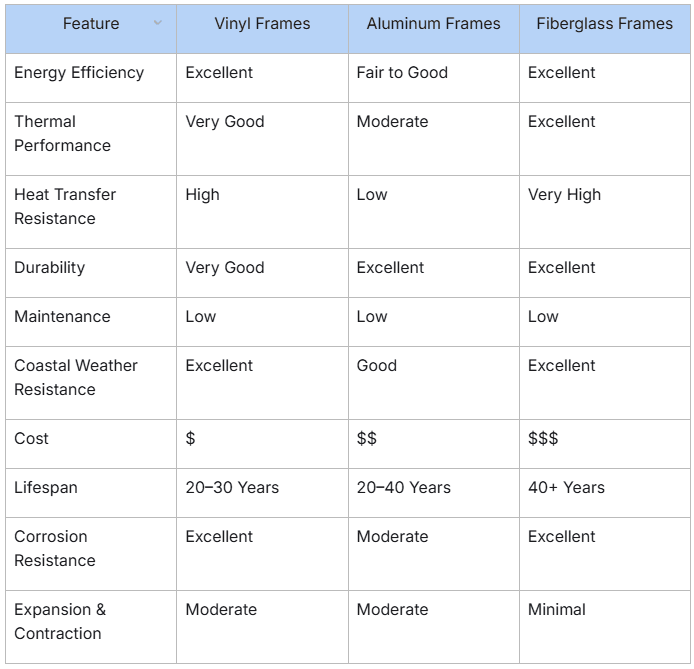
For many Florida homeowners, the decision often comes down to vinyl versus fiberglass.
Fiberglass usually wins from a pure performance standpoint. Vinyl often wins on overall value.
Which Window Frame Material Is Best for Florida Homes?
The best window frame material for hot climates depends on how you balance upfront costs with long-term performance.
That may sound like a vague answer to others. In some ways, it is. Every home is different.
Still, there are some clear patterns.
Best Overall Value: Vinyl
Vinyl remains the most common recommendation because it provides:
- Strong energy efficiency
- Reasonable pricing
- Moisture resistance
- Low maintenance
- Long-term durability
For many window replacement projects, vinyl offers the highest return on investment.
Best Premium Choice: Fiberglass
Homeowners focused on maximum performance often prefer fiberglass.
Its thermal performance, durability, and dimensional stability make it one of the strongest options available for hot climates.
Best Modern Appearance: Aluminum
If sleek design and narrow sightlines are the primary goal, aluminum remains attractive.
Just make sure thermally broken frames are part of the discussion.
Best for Coastal Homes
Florida’s coastal areas create unique challenges.
Salt exposure, humidity, storms, and UV radiation all affect window performance.
In these environments, coastal windows built with vinyl or fiberglass frames generally provide the strongest long-term resistance to corrosion and weather-related deterioration.
How Glass Packages Affect Window Performance
Frame material matters.
The glass package matters just as much.
In fact, a high-quality frame paired with poor glass can underperform compared to a moderate frame paired with premium glass technology.
When evaluating windows, look for features such as:
- Low-E Glass
- Low-E glass coatings
- Argon gas
- Double-pane windows
- Triple-Pane Windows
- Triple-pane glass
- Gas-filled panes
- Insulating glazing units
- Impact-resistant glass
Low-E Glass and Solar Heat Gain
Low-Emissivity glass, commonly called Low-E Glass, contains microscopic coatings that help reflect heat while allowing visible light to enter the home.
This reduces solar heat gain without sacrificing natural light.
For Jacksonville homeowners, that balance can be particularly important. Nobody wants a dark home. At the same time, excessive solar heat gain can make rooms uncomfortable and increase cooling costs.
Double or Triple Pane Windows
Double-pane windows remain the most common choice in Florida.
Triple-pane glass can offer additional insulation, although the benefits may vary depending on the climate zone and overall window design.
Many homeowners assume that more panes automatically mean better performance. Sometimes they do. Sometimes the improvement is modest compared to upgrading the frame material or Low-E coatings.
That’s why reviewing NFRC ratings is often more useful than focusing on a single feature.
Why NFRC Ratings Matter More Than Marketing Claims
Window marketing can get confusing quickly.
One company promotes triple-pane glass. Another emphasizes composite frames. A third focuses on impact resistance.
The NFRC label helps cut through much of that noise.
The National Fenestration Rating Council provides standardized ratings that allow homeowners to compare products objectively.
Important measurements include:
U-Factor
Measures how well a window prevents heat transfer.
Lower numbers generally indicate better insulation.
Solar Heat Gain Coefficient
The Solar Heat Gain Coefficient measures how much solar radiation passes through the window.
Lower SHGC values are often preferred in hot climates because they help reduce unwanted heat gain.
Air Leakage
Measures the amount of air infiltration around the window.
Lower numbers typically indicate tighter seals and improved energy performance.
When comparing products from any Jacksonville window company, NFRC ratings often provide more meaningful information than broad performance claims.
Window Replacement vs. Window Frame Replacement
Some homeowners assume replacing the frame alone is enough.
Occasionally, it is.
More often, however, complete window replacement delivers better results because the entire system is upgraded simultaneously.
This includes:
- Frame
- Glass package
- Weatherstripping
- Hardware
- Seals
A window frame replacement may address isolated issues, but if the glass and seals are aging, homeowners may miss out on significant energy-efficiency improvements.
Professional installation also plays a major role.
Even the best-performing window can underperform if installation errors create air leaks or moisture intrusion.
Why Professional Installation Matters in Florida
A surprising number of window performance issues aren’t caused by the product itself.
They’re caused by installation.
Florida homes face:
- Intense sunlight
- Heavy rainfall
- Hurricane-force winds
- Humidity
- Coastal weather exposure
Professional installation helps ensure windows comply with local building codes and perform as intended.
Experienced installation services typically evaluate:
- Structural openings
- Flashing systems
- Moisture management
- Impact requirements
- Seal integrity
In many cases, customer satisfaction is influenced as much by installation quality as by the actual window product selected.
What Jacksonville Homeowners Should Consider Before Buying New Windows
If you’re researching windows specifically for Jacksonville, several local factors should influence your decision.
The area experiences:
- Long cooling seasons
- High humidity
- Strong UV exposure
- Seasonal storms
- Salt-air exposure in coastal communities
Because of these conditions, many homeowners prioritize:
- Energy efficiency
- Impact-resistant glass
- Weatherproof Windows
- Coastal Windows
- Corrosion-resistant hardware
- Stainless steel hardware
- Low-maintenance materials
A product that performs well in northern climate zones may not be the ideal solution for Northeast Florida.
That’s one reason many local homeowners focus on vinyl frames and fiberglass frames when comparing replacement options.
Frequently Asked Questions
Q1. What is the best window frame material for hot climates?
A1. For most homeowners, vinyl and fiberglass are the top choices. Fiberglass typically provides the highest thermal performance, while vinyl offers the best balance of energy efficiency and affordability.
Q2 Are vinyl window frames good in Florida?
A2. Yes. Vinyl window frames resist moisture, reduce thermal transfer, and require very little maintenance. They are commonly recommended for Florida homes because they perform well in hot and humid conditions.
Q3. Do aluminum window frames get hot?
A3. Yes. Aluminum frames conduct heat more readily than vinyl or fiberglass. Thermally broken frames improve performance, but aluminum still transfers more heat than most non-metal alternatives.
Q4. Are fiberglass windows worth the extra cost?
A4. Many homeowners believe so. Fiberglass frames offer exceptional durability, strong energy efficiency, and long-term performance. The higher upfront investment may be offset by longevity and lower energy consumption.
Q5. What is the most energy-efficient window frame?
A5. Fiberglass is often considered the most energy-efficient frame material. However, high-quality vinyl frames paired with Low-E Glass and Argon gas can also achieve excellent performance.
Q6. How important is the Solar Heat Gain Coefficient in Florida?
A6. Very important. A lower Solar Heat Gain Coefficient helps reduce unwanted heat gain from sunlight, which can improve indoor comfort and lower cooling costs.
Q7. Should I choose double-pane or triple-pane windows?
A7. Double-pane windows are sufficient for many Florida homes. Triple-pane glass may offer additional insulation benefits, but performance should always be evaluated using NFRC ratings rather than pane count alone.
Q8. Are impact-resistant windows required in Florida?
A8. Requirements vary by location and building codes. Many coastal communities require or strongly encourage impact-resistant glass for storm protection.
Final Thoughts
Choosing the best window frame material for hot climates ultimately comes down to balancing energy efficiency, durability, appearance, and budget.
For many Florida homeowners, vinyl frames offer an excellent combination of affordability, thermal performance, and low maintenance. Fiberglass frames often provide the highest level of long-term performance and durability, while aluminum frames remain a practical choice for modern designs when equipped with thermal breaks to reduce heat transfer.
The most effective windows pair the right frame material with high-performance features such as Low-E glass, argon gas fills, and insulating glazing units. Reviewing NFRC ratings, ENERGY STAR® certification information, and local climate conditions can help homeowners make a more informed investment.
Throughout Jacksonville and East and Central Florida, where intense sunlight, high humidity, and long cooling seasons are a daily reality, selecting the best window frame material for hot climates can improve indoor comfort, lower energy costs, and enhance long-term home value.
When comparing options, focus on proven performance, climate suitability, and professional installation. If you’re considering new windows for your home, our team at All Florida Exteriors can help you choose the right window system and provide expert installation tailored to Florida’s demanding climate.
Contact us today!