

If you are wondering how to install soffit without bird box construction, the short answer is this: soffit can often be installed without building a traditional bird box when the roof overhang, fascia, and framing already provide secure attachment points. In many Florida homes, a properly installed F channel, J channel, furring strip, or fascia system can support the soffit panels without adding boxed framing at the roof edges.
That does not mean every home can skip it. Some roof designs need bird boxes for support, appearance, or ventilation control. But plenty of soffit replacement projects, especially on homes with existing fascia boards or modern roof overhangs, can avoid them entirely.
For Florida homeowners, the bigger question is not just “Can I skip a bird box?” It is “Will my soffit system still protect the attic, support ventilation, hold up to humidity, and meet the realities of hurricane-prone weather?” That is where the details matter.
All Florida Exteriors works with homeowners across East and Central Florida who are dealing with aging soffit, damaged fascia, poor attic airflow, pest gaps, and exterior trim that has simply had enough of Florida weather. So let’s walk through the topic in plain terms.
How to Install Soffit Without a Bird Box Construction
To install soffit without bird box framing, a contractor typically inspects the roof overhang, confirms there are stable attachment points, installs receiving channels such as F channel or J channel, adds a furring strip if needed, cuts vented soffit panels to size, and secures the panels into the fascia system and wall-side channel.
That is the clean version. Real homes are messier.
Sometimes the old plywood soffit is hiding rot. Sometimes the fascia looks fine from the ground but falls apart once a screw gun touches it. Sometimes a roof slope or gable roof creates an awkward angle joint that needs careful trimming with tin snips, a utility knife, a chalk line, a framing square, or a speed square. And sometimes the home has a roof system that was built in a way that makes a bird box the safer choice.
Still, the process usually follows this basic order:
- Inspect the soffit, fascia, roof sheathing, and roof overhang.
- Remove damaged soffit panels or old trim.
- Repair rotted wood, loose fascia, or open gaps.
- Install F channel, J channel, vinyl F trim, or another receiving trim.
- Add blocking or furring strips if the soffit needs more support.
- Cut vinyl soffit or aluminum soffit panels to fit.
- Slide panels into place with room for expansion.
- Fasten panels securely using approved fasteners, often aluminum roofing nails.
- Finish fascia with aluminum fascia, an aluminum fascia cap, fascia covers, or other trim.
- Check ventilation, pest gaps, and gutter system connections.
That is how to install soffit without bird box framing in principle. But before anyone starts cutting panels, it helps to understand what a bird box actually is.
What Is a Bird Box in Soffit and Fascia Work?
A bird box is a small framed box built at the end of a roof overhang, often near gable ends or roof corners. It closes off open framing and gives the soffit and fascia something solid to attach to.
The name can confuse people. A bird box in construction is not the same as Bluebird houses, nest box kits, Swift bricks, Zeist box designs, wireless bird box cameras, or bird-box cameras used for bird education. It is not meant to attract cavity-nesting birds, cliff swallows, downy woodpeckers, baby birds, breeding pairs, or other wildlife. Actually, in exterior remodeling, the goal is usually the opposite. The soffit system should keep wildlife and miscellaneous animals out of the attic.
Traditional bird boxes are common on older homes, gable roof designs, and houses with exposed rafter tails. They can also show up in faux historic designs where the trim is part of the home’s character. Some homes with cedar siding, vinyl siding, brick ledges, or custom roof edges need a more careful transition than a basic flat soffit run.
In short, bird boxes are not decorative nest boxes. They are part of the exterior framing and trim system.
When Is a Bird Box Needed?
A bird box may be needed when the roof overhang does not provide enough structure to support the soffit. If there is nowhere solid to fasten the panels, the system can sag, open up, or fail during strong winds.
A bird box may also make sense when:
- The home has open rafter tails.
- The gable end has no clean attachment point.
- The roof edge needs a boxed finish for appearance.
- The soffit span is too wide without extra support.
- The fascia system is damaged or missing.
- The existing exterior has unusual angle joints or corner boxes.
- The roof design requires a finished transition between multiple slopes.
This comes up a lot in soffit repair Jacksonville homeowners request after storms or long-term moisture exposure. The first visible problem might be a loose soffit panel, but the real issue may be deeper. Rot near the fascia, weak framing, or an open cavity can make a simple panel replacement less simple.
There are also cases where building codes, hurricane code requirements, or local inspection standards may affect how the work should be done. Florida is not the place to guess on exterior attachment. Wind matters here.
When Can a Bird Box Be Avoided?
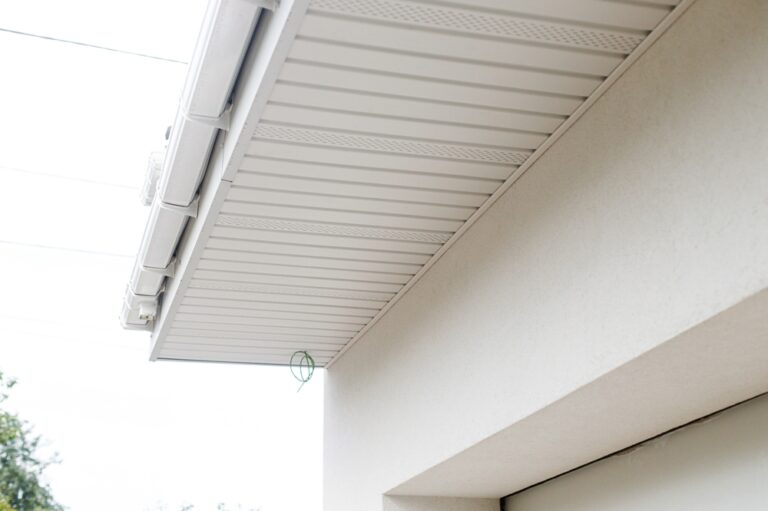
A bird box can often be avoided when the home already has a stable fascia board, a consistent roof overhang, and a wall-side attachment point for the soffit. In many soffit and fascia installation projects, the installer can use F channel, J channel, or vinyl F trim to create a clean receiving edge.
This is especially common during soffit replacement, where the home already has a defined soffit area. The old panels may be damaged, but the framing may still be usable. In that case, adding new bird boxes could be unnecessary.
You may be able to avoid bird boxes when:
- The roof overhang is already enclosed.
- The fascia board is straight and secure.
- The wall side can accept channel trim.
- A furring strip can provide needed support.
- The soffit panels are short enough to stay stable.
- The roof edges do not require boxed trim.
- Ventilation can be maintained with perforated plastic, vinyl soffit, or aluminum soffit.
This is where a good inspection saves money. It is easy to assume more framing is better, but that is not always true. Extra framing can trap moisture if done poorly. It can also add labor without improving the finished system.
For homeowners searching “soffit and fascia installation near me,” this is one of the questions worth asking during an estimate: “Do I actually need bird boxes, or can the new soffit be installed with the existing framing?”
Florida Considerations: Heat, Humidity, Wind, and Wildlife
Florida homes ask a lot from soffit and fascia systems. The soffit is not just there to make the underside of the roof look finished. It helps the attic breathe, protects roof edges, supports energy efficiency, and helps keep pests out.
In Jacksonville and throughout East and Central Florida, homeowners deal with heat, humidity, salt air near the coast, heavy rain, and hurricane-season wind. That mix can be rough on plywood soffit, composite wood, plastic wood, and older trim materials. Even composite materials and Royal composite material products need proper installation and drainage.
Here are the Florida-specific details that matter most.
Attic Ventilation
Vented soffits allow fresh air to enter the attic near the roof overhang. That intake air works with ridge vents, gable vents, or other exhaust vents to reduce trapped heat and moisture.
This is basic building science, but it is also something homeowners feel. A poorly ventilated attic can make the home harder to cool. It can also contribute to moisture problems under the roof sheathing.
All Florida Exteriors notes that vented soffits are an important part of a home’s ventilation system because they allow airflow into the attic space. That matters in Florida, where attic heat can build quickly during long warm seasons.
Moisture Control
Soffit and fascia protect the roof edge from rain, wind-driven water, and humidity. When fascia covers are loose or the aluminum fascia cap is damaged, water can reach the wood behind it. Once that starts, repairs can grow.
This is why soffit and fascia installation is usually treated as a system, not two separate cosmetic pieces. The soffit, fascia, roof system, and gutter system all touch the same problem.
Hurricane Exposure
Florida installation has to account for wind uplift. Loose panels, weak nails, or poorly supported trim can become a problem during storms. A soffit that looks fine in calm weather may not perform well when the wind pushes under the roof overhang.
This is one reason professional soffit and fascia installation Jacksonville homeowners request often includes fascia repair, panel replacement, and fastening upgrades at the same time.
Pest and Wildlife Gaps
Open soffit areas can attract birds, squirrels, wasps, bats, and other wildlife. Small nesting and roosting holes can become bigger problems quickly.
If there are baby birds or active nests, homeowners should avoid disturbing them and contact wildlife rescue or the appropriate local resource. Once the area is clear, the exterior can be repaired so animals do not return.
Best Materials for Soffit Without a Bird Box
The best material depends on the home, budget, roof overhang, and exposure. There is not one perfect answer, although some materials do make more sense in Florida than others.
Vinyl Soffit
Vinyl soffit is common because it is affordable, clean-looking, and available in vented panels. For vinyl soffit installation Jacksonville homeowners often choose it for lower maintenance and a smooth finished look.
It can work well without bird boxes when installed into an F channel or J channel with proper support. The key is leaving room for expansion and not fastening it too tightly.
Aluminum Soffit
Aluminum soffit is durable, lightweight, and moisture-resistant. It is a strong option for many Florida homes, especially when paired with aluminum fascia or an aluminum fascia cap.
Aluminum can dent, and it needs clean cuts and careful fastening, but it performs well in many exterior remodeling projects.
Plywood Soffit
Plywood soffit appears on many older homes. It can be painted and repaired, but it is more vulnerable to moisture if not maintained. In Florida, that can become a problem over time.
If plywood is already failing, replacing it with vinyl, aluminum, or another exterior-grade option may be smarter than patching it again.
Composite Materials
Composite materials, composite wood, and plastic wood products can offer a wood-like appearance with better resistance to certain types of wear. Still, they need proper installation. No material performs well if water is trapped behind it.
Tools and Installation Details Homeowners Often Ask About
A homeowner doing research may see terms like F channel, J channel, GP tape, Zip tape, scarf joint, miter divider, angle joint, and furring strip. Some of these are often used in soffit and fascia work. Others depend on the exact project.
Common tools and materials include:
- Screw gun
- Utility knife
- Tin snips
- Chalk line
- Speed square
- Framing square
- Aluminum roofing nails
- F channel or J channel
- Vinyl F trim
- Furring strips
- Fascia covers
- Aluminum fascia cap
A scarf joint may be used when joining longer trim runs. Angle joints are common around corners or gable roof transitions. A miter divider may be used for trim layout. GP tape or Zip tape may appear in related exterior or sheathing work, though they are not a cure-all for bad soffit framing.
The detail that matters most is fit. Soffit panels should not be jammed into place. They need enough support to stay put and enough movement space to avoid buckling.
How Soffit, Fascia, Gutters, and Roof Edges Work Together
It helps to picture the roof edge as one connected assembly.
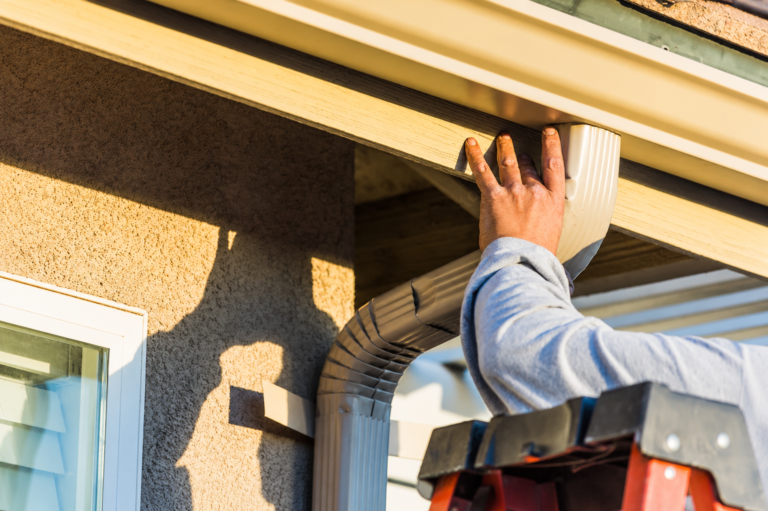
The soffit covers the underside of the roof overhang. The fascia is the vertical board or trim along the roof edge. Gutters often attach to the fascia. Gutter guards may attach to the gutter system and the roof edge. The roof sheathing and roofing materials sit above all of this.
When one part fails, the others can suffer.
A loose gutter can pull on the fascia. Rotten fascia can let soffit panels sag. Blocked soffit vents can affect attic ventilation. Poor roof drainage can stain or weaken trim. This is why soffit and fascia installation is often handled alongside gutter review, siding repair, or broader Florida exterior remodeling.
All Florida Exteriors provides residential exterior solutions across East and Central Florida and has been serving Florida homeowners since 2000, with services that include siding, windows, hurricane shutters, and exterior work. That broader exterior focus matters because soffit issues rarely live in isolation.
Is This a DIY Project?
Some homeowners can replace a small soffit section themselves. A short, low, simple roof overhang with solid framing is manageable for someone comfortable with ladders, cutting trim, and using basic tools.
But full soffit and fascia installation is different.
The work can involve ladders, roof edges, hidden rot, ventilation calculations, pest gaps, aluminum trim, and storm-rated fastening. On a two-story home, or a home with a steep roof slope, I think most homeowners are better off getting a professional assessment.
Not because every project is impossible. It is just easy to miss something. A soffit panel can look finished while still blocking attic intake air. A fascia cover can look neat while hiding softwood. That is the kind of mistake that comes back later.
Cost Factors for Installing Soffit Without a Bird Box
Installing soffit without bird boxes may reduce labor and material costs, but pricing depends on the condition of the home.
Cost factors include:
- Linear feet of soffit and fascia
- Material choice
- Amount of removal needed
- Fascia repair or replacement
- Whether aluminum fascia caps or fascia covers are added
- Roof height and access
- Gable roof complexity
- Ventilation upgrades
- Hurricane-related fastening needs
- Gutter system removal or reattachment
Jacksonville homeowners may see soffit and fascia installation costs vary by materials, labor, removal needs, and coastal conditions. That is why an in-person estimate is usually more reliable than a flat online number.
Signs You Need Soffit Repair or Replacement
You may need soffit repair Jacksonville service if you notice:
- Sagging soffit panels
- Peeling paint near the roof edges
- Water stains under the overhang
- Soft or rotted fascia
- Pest activity
- Visible gaps
- Moldy attic smell
- Hot attic temperatures
- Loose gutter sections
- Cracked vinyl soffit
- Rusted or dented aluminum soffit
- Missing panels after a storm
Some signs are obvious. Others are subtle. A small gap near the fascia might not look urgent, but it can let in rain, insects, and wildlife.
Jacksonville Homes Have Their Own Challenges
Jacksonville homes are not all built the same. Some neighborhoods have older wood-framed homes with deep overhangs. Others have newer single-family construction with cleaner roof edges and modern exterior materials. Coastal areas may deal with salt exposure. Inland areas still deal with heat, storms, humidity, and heavy rain.
That is why “soffit and fascia installation Jacksonville” is not just a local search. It reflects a real local need. Homeowners want a contractor who understands Florida weather, building codes, hurricane code concerns, residential design, and the construction industry practices that apply here.
For a homeowner searching “vinyl soffit installation Jacksonville” or “soffit and fascia installation near me,” the best answer is not always the cheapest panel replacement. It is the system that protects the attic, roof edge, fascia, siding, and gutters together.
FAQs
Q1. Can you install a soffit without a bird box?
Yes, many homes can have a soffit installed without a bird box if the roof overhang, fascia, and wall-side framing provide secure attachment points. Installers often use F channel, J channel, furring strips, and fascia trim instead of building boxed framing.
Q2. What is a bird box on a house?
A bird box is a framed enclosure at the end of a roof overhang. It closes off open roof framing and gives the soffit and fascia a finished attachment point. It is not the same as nest boxes or birdhouses used for wildlife.
Q3. When is a bird box required?
A bird box may be required when the roof edge has open rafters, weak attachment points, wide overhangs, or gable-end framing that needs to be boxed in. It may also be needed for appearance or structural support.
Q4. Does soffit need ventilation?
In most Florida homes, yes. Vented soffit helps bring fresh air into the attic. That airflow helps reduce heat and moisture buildup when paired with proper exhaust ventilation.
Q5. Is vinyl soffit good for Florida homes?
Vinyl soffit can be a good option for Florida homes because it is low-maintenance and available in vented styles. It must be installed correctly so it can expand, drain, and stay secure during wind.
Q6. Is an aluminum soffit better than a vinyl soffit?
Aluminum soffit is strong, moisture-resistant, and durable. Vinyl soffit is often more affordable and easier to maintain. The better choice depends on the home’s exposure, design, budget, and fascia condition.
Q7. Can soffit be replaced without replacing the fascia?
Sometimes, yes. But if the fascia is rotted, loose, or poorly covered, replacing only the soffit may leave the roof edge vulnerable. Many projects include both soffit and fascia installation because the parts work together.
Q8. Can soffit problems affect energy efficiency?
Yes. Poor attic ventilation can trap heat, which may make the home harder to cool. Properly vented soffit supports airflow and can contribute to better energy efficiency.
Q9. What should I do if birds are nesting in my soffit?
Do not seal the area while birds or baby birds are inside. Contact a wildlife rescue resource or local wildlife professional. Once the area is clear, repair the soffit and close entry gaps.
Q10. Who installs soffit and fascia in Jacksonville?
All Florida Exteriors provides soffit and fascia installation services for homeowners across East and Central Florida, including Jacksonville-area projects. Our exterior services include soffit, fascia, siding, windows, and hurricane-related exterior improvements.
Final Thoughts
Learning how to install soffit without bird box construction starts with one simple idea: the soffit needs secure support, clean airflow, and a finished edge. If the existing roof overhang and fascia system can provide that, a traditional bird box may not be needed.
But the decision should be based on the home, not a shortcut.
Florida homes deal with heat, moisture, pests, wind, and aging exterior materials. A good soffit system should protect the attic, support the roof edge, work with the gutter system, and look right from the curb. Sometimes that means using F channel, J channel, vinyl soffit, aluminum soffit, furring strips, and fascia covers. Sometimes it means repairing wood first. And sometimes, yes, it still means building bird boxes where the structure calls for them.
Before making a decision, it is important to evaluate the entire exterior system rather than focusing on a single component. A professional inspection can help identify the most effective and long-lasting solution for your home.
If you’re planning exterior improvements, our team at All Florida Exteriors can help. In addition to soffit and fascia services, we provide expert window installation solutions designed to improve your home’s appearance, energy efficiency, and protection from the elements.