

If you’ve lived in Jacksonville long enough, you know rain here doesn’t arrive politely. It shows up fast. Hard. Sideways sometimes. Afternoon storms roll in during summer, and hurricane season adds another layer of uncertainty. That’s exactly why understanding the common gutter installation mistakes to avoid isn’t just helpful. It’s necessary.
Gutter system matters more than most homeowners think.
Rain gutters aren’t just there to keep water from dripping on your head when you walk out the front door. They control water flow from your roof, protect your fascia board, direct water drainage away from your foundation, and reduce long-term structural issues. When gutter installation is done right, you don’t think about it. When it’s done wrong, you definitely do.
We’ve seen it across East and Central Florida. DIY projects that started with good intentions. Rushed installation during roof replacement. Homes fitted with the wrong gutter size for the roof’s square footage. And a year later? Water damage. Soil erosion. Fascia rot. Foundation problems that cost far more than the original install.
Now, let’s walk through the most common gutter installation mistakes to avoid in Jacksonville homes, and what to do instead.
Common Gutter Installation Mistakes to Avoid
1. Incorrect Gutter Pitch (Slope)
This one is easy to miss. Gutters look straight from the ground, so they must be fine, right?
Not necessarily.
Gutter pitch is what allows water flow toward the downspouts. Without the proper slope (usually about 1/4 inch per 10 feet), water pooling happens. And standing water leads to gutter damage, mosquito breeding, corrosion, and eventually water overflow.
In heavy downpours common in Northeast Florida, even a slightly off-pitch can cause water to leak behind the gutter, soaking the roof fascia and leading to fascia rot.
Prevention is straightforward but precise. During gutter installation in Jacksonville FL, installers should measure total gutter length carefully and calculate slope based on that span. After installation, a post-installation inspection with a hose test can confirm proper water drainage.
It sounds simple. But small math errors add up.
2. Choosing the Wrong Gutter Size for Your Roof
“What size gutters do I need for my house in Jacksonville?”
It’s a common question. And the answer depends on roof size, roof pitch, and regional rainfall.
A large roof square footage paired with a steep roof pitch sends a surprising volume of water into the roof gutter. Standard 5-inch gutters might not handle the load. Water overflow during storms isn’t just messy. It increases the risk of foundation damage and basement damage, even in homes that don’t technically have full basements.
Many installation mistakes start with underestimating runoff volume.
Professional gutter installers calculate roof square footage and drainage patterns before recommending gutter size. Sometimes that means upgrading to 6-inch seamless gutters. It’s not about upselling. It’s about capacity.
3. Poor Gutter Hanger Spacing
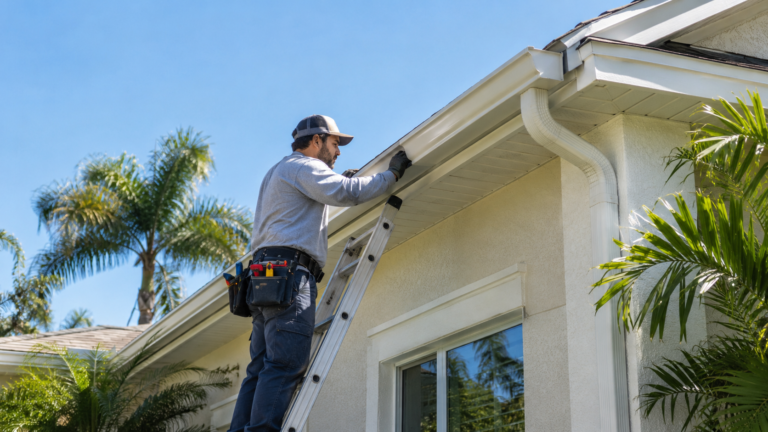
Gutter hangers and support brackets don’t get much attention. They should.
In the Florida heat, gutter materials expand and contract. During storms, heavy water weight stresses the system. If hangers spacing is too wide, the gutter system begins to sag. Over time, that sag disrupts the gutter pitch and causes water to pool.
We’ve seen vinyl gutters pull away from the roof fascia simply because gutter brackets were spaced too far apart.
Best practice? Hangers every 24 inches, sometimes closer in high-wind zones. Secure attachment to the fascia board is critical. Nails alone are rarely enough; screws provide a stronger long-term hold.
It’s one of those small details that protects against structural problems later.
4. Ignoring Expansion and Contraction
Metal expands. Vinyl expands. Everything shifts in Florida’s climate.
Without proper expansion joints, long runs of seamless gutters can buckle. Sections separate. Gutter sealant cracks. Water infiltration begins at the seams.
Ironically, seamless gutters Jacksonville FL homeowners prefer for fewer leak points can still fail if expansion isn’t factored into the installation process.
Professional contractors account for temperature swings during installation. They allow subtle spacing adjustments. They don’t over-tighten fasteners to the point of restricting natural movement.
You may never notice when this is done correctly. You will notice when it isn’t.
5. Incorrect Gutter Placement
Gutter placement isn’t just about lining it up under the roof edge.
The drip edge plays a role. Capillary action can pull water backward under shingles if the gutter sits too far from the roofline. Too close, and water overshoots the gutter during heavy rainfall.
Proper gutter design positions the system just below the roof drip edge while ensuring adequate catchment during storm damage events.
If you’ve ever seen streaks down siding after rain, there’s a chance placement is slightly off.
A professional gutter installer looks at roof inspection findings, roof replacement details, and drip edge alignment before final mounting. It’s rarely a one-size-fits-all measurement.
6. Not Enough Downspouts (Or Poor Drainage Planning)
“How many downspouts do I need?”
More than you think, sometimes.
Insufficient downspouts restrict water drainage. During Jacksonville rain gutter installations, installers should plan the full water drainage system, not just the horizontal sections.
Too few downspouts mean water backs up. That pressure forces overflow at corners. Over time, soil erosion forms around the home. Foundation issues start subtly. A hairline crack. Minor shifting. Nothing dramatic at first.
Downspouts should extend at least 5 to 10 feet away from the foundation. Better yet, connect them to an underground drainage system when possible.
Gutter installation mistakes often come from focusing on appearance rather than flow. Flow is everything.
7. Skipping Gutter Guards in Tree-Heavy Areas
Jacksonville neighborhoods have mature trees. Live oaks, pines, magnolias. They’re beautiful. They also shed.
Clogged rain gutters Jacksonville FL homeowners ignore can lead to water pooling and insect infestations. Stagnant water attracts pests. Debris buildup traps moisture against the fascia board.
A gutter guard system or leaf guard gutters reduces maintenance frequency. Systems like the gutter helmet are designed to block debris while allowing water flow.
Are gutter guards mandatory? No. But in many parts of Northeast Florida, they’re practical.
Gutter maintenance twice a year might be enough for some homes. Others need more frequent cleaning if leaf guards aren’t installed.
8. Using Incompatible or Low-Quality Gutter Materials
Vinyl gutters are affordable. Aluminum is lightweight and rust-resistant. Steel is durable but heavier. Half-round gutters offer a different aesthetic but may require specific support brackets.
Choosing gutter materials without considering climate, roof size, and home construction leads to premature gutter repair.
Florida humidity accelerates wear. Salt air near coastal areas increases corrosion. Cheap fasteners rust faster than the gutter itself.
During a residential gutter service consultation, discussing material performance honestly matters. It’s not about the most expensive option. It’s about longevity relative to your home’s exposure.
9. Poor Sealant Application and Leaky Seams
Gutter sealant seems straightforward. Apply it, let it dry, done.
Except improper sealant application is one of the most common installation mistakes to avoid. Uneven application leaves gaps. Over-application creates brittle buildup that cracks under expansion.
Water leakage at seams doesn’t always show immediately. It might take months. You’ll notice discoloration on the fascia board or peeling paint.
Seamless gutters reduce joint failure points, which is one reason many homeowners search for seamless gutters Jacksonville FL online. Fewer seams mean fewer opportunities for leaks.
But even seamless systems require proper corner sealing and end caps.
10. Skipping Post-Installation Inspection and Ongoing Maintenance
Installation is not the final step.
A proper post-installation inspection ensures water flow, confirms hanger spacing, checks gutter pitch, and verifies downspout placement. It also catches small misalignments before they become property damage.
After that? Routine gutter maintenance.
Twice a year is typical. More often, if your property has heavy tree coverage. Look for sagging, water overflow during storms, signs of fascia rot, and soil erosion patterns around the home.
Gutter damage often appears gradual. Structural issues rarely happen overnight. They build quietly.
Why Improper Gutter Installation Leads to Financial and Structural Risks
It’s tempting to treat gutters as secondary. They’re not visible like siding. They don’t feel urgent like a roof replacement.
But consider this.
Water infiltration behind siding can cause hidden mold. Persistent water pooling near the foundation contributes to foundation damage. Mismanaged water drainage can undermine landscaping and hardscaping investments.
Repair and replacement services for structural problems cost far more than installing the correct gutter system from the beginning.
And sometimes, we think homeowners underestimate how interconnected everything is. Roof pitch affects water speed. Roof square footage affects volume. Drainage system design affects soil stability. It’s all connected.
When to Call a Professional Gutter Installer in Jacksonville
If you’re searching “affordable gutters near me” or “gutter installation Jacksonville FL,” it likely means you’ve noticed something.
Overflow during heavy rain. Sagging sections. Peeling paint near the roof fascia. Or maybe you’re planning new home construction or a roof inspection and want to coordinate the installation schedule properly.
Professional help doesn’t always mean full replacement. Sometimes it’s a targeted gutter repair. Other times, upgrading to seamless gutters or adding a gutter guard system prevents recurring issues.
At All Florida Exteriors, residential gutter service includes assessment of roof pitch, roof size, total gutter length, and existing drainage patterns. Industry experience matters here. Especially in East and Central Florida’s climate.
A pressure-free estimate lets homeowners understand their options without obligation. Contracting partners coordinate when gutters need alignment with roof replacement timelines.
It’s less about selling and more about preventing preventable damage.
Frequently Asked Questions
What are the most common gutter installation mistakes to avoid?
Incorrect gutter pitch, poor hanger spacing, wrong gutter size, insufficient downspouts, improper sealant application, and skipping post-installation inspection are among the most common issues.
How do I know if my gutters are installed correctly?
During rainfall, observe water flow. Water should move smoothly toward downspouts without pooling or overflowing. Gutters should sit securely against the fascia board with no sagging.
Do I need gutter guards in Jacksonville?
If your property has significant tree coverage, gutter guards or leaf guard gutters reduce maintenance and the risk of clogging. They are especially helpful in preventing debris-related overflow.
How often should gutters be inspected?
At least twice per year. More often after storm damage or heavy downfalls. A roof inspection following hurricane season can include gutter evaluation.
What size gutters are best for heavy Florida rain?
Homes with larger roof square footage or steep roof pitch may require 6-inch gutters instead of standard 5-inch systems. A professional contractor can calculate capacity based on roof size and regional rainfall.
Final Words
Gutters don’t demand attention until something goes wrong. And by then, repairs are rarely simple.
Understanding the common gutter installation mistakes to avoid isn’t about chasing perfection. It’s about thoughtful planning, careful installation, and regular maintenance. Jacksonville rain will test your gutter system eventually. The question is whether it was built to handle it.
If you’re not sure your current gutters are doing their job — or planning a new installation project — getting professional insight early may prevent far more expensive structural problems later. Our team at All Florida Exteriors can help you spot potential issues early and make sure your home is set up to handle whatever the next storm brings. Let’s talk.
Contact us today!