

If you live in Florida and own a mobile home, you’ve probably worried about the roof during storm season, the AC during summer, and maybe the windows when energy bills creep up. Mobile home skirting ventilation tips rarely make that list. They usually come up later, often after something smells off or the floor feels softer than it should.
We think that’s normal. Skirting sits low, out of sight. It doesn’t ask for attention. But in a place like Jacksonville, where heat, humidity, rain, and soil moisture are part of daily life, what’s happening under your home quietly affects everything above it.
This guide is meant to slow things down a bit and explain skirting ventilation in plain terms. Not just what it is, but why it matters so much for Florida mobile homes, how to think about it realistically, and where homeowners tend to get tripped up. We’ll keep it practical. No pressure. Just the basics done well, with Florida’s climate front and center.
What Is Mobile Home Skirting Ventilation?
Mobile home skirting ventilation is the system of vents or ventilation panels installed around the base of a mobile home. Their job is simple on paper: let air move in and out of the crawl space under the home.
That airflow helps control moisture, heat, and dead air pockets under the floor system. Without it, ground moisture turns into trapped water vapor. Heat builds. Wood stays damp longer than it should. Over time, that combination can invite mold, pest problems, and even structural issues.
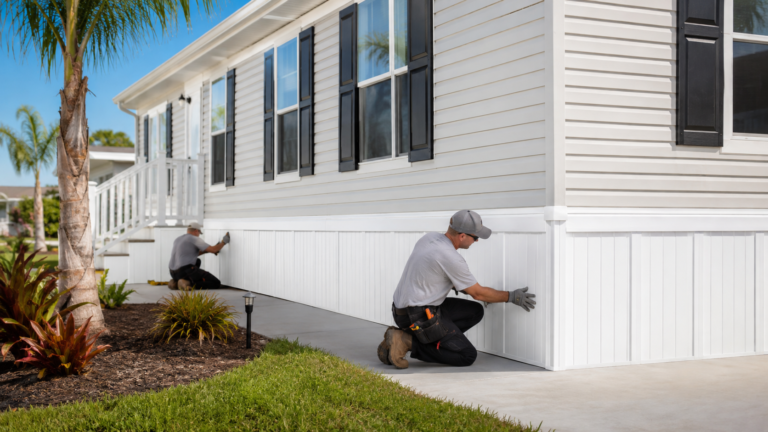
Skirting itself, whether vinyl skirting, metal skirting, faux brick, or concrete board skirting, acts like a barrier. Ventilation holes and skirting vents are what keep that barrier from becoming a sealed box.
Mobile Home Skirting Ventilation Tips
Why Skirting Ventilation Matters More in Florida
This is where Florida stops playing by the same rules as other states.
In drier climates, skirting ventilation is helpful. In Florida, it’s protective. Our air already carries moisture. Add frequent rain, a high water table, and shaded ground under a manufactured home, and you’ve got constant moisture intrusion trying to move upward.
In Jacksonville and across East and Central Florida, crawl spaces don’t really “dry out” on their own. Even after a sunny week, ground moisture lingers. Without underfloor venting, water vapor rises and settles against joists, insulation, and flooring. Slowly. Quietly.
You may not see damage right away. That’s the tricky part. Problems show up months or years later as soft spots, pest infestations, or rising energy bills because damp air is harder to cool.
How Much Ventilation Does a Mobile Home Need?
This question comes up a lot. And the honest answer is: it depends.
A common guideline refers to square inch of vent opening per square foot of crawl space. Building codes often suggest a minimum ratio, but Florida conditions sometimes call for more thoughtful placement rather than just more vents.
Factors that matter:
- The square foot size of the home
- Whether it’s a single-wide mobile skirting layout or larger
- Soil conditions and ground moisture levels
- Whether a ground vapor barrier is installed
- Skirting material and how tightly it seals
Adding vents without considering airflow patterns can create air turbulence that doesn’t actually move moisture out. Sometimes, fewer, better-placed ventilation panels outperform lots of poorly positioned ones.
Best Placement for Skirting Vents in Florida
Vent placement matters just as much as vent count.
Ideally, skirting vents are spaced evenly around the perimeter in linear feet, allowing cross-ventilation. Air should be able to enter on one side and exit on the opposite side, creating movement instead of stagnant pockets.
In Florida, vent height matters too. Vents installed too low can allow rain splashback or floodwater inside the crawl space. That defeats the whole purpose. Keeping vents slightly elevated above grade, without blocking airflow, helps balance weather protection and moisture control.
Also worth mentioning: landscaping creeps. Mulch, plants, and soil tend to slowly block vents over time. It’s an easy thing to miss during home maintenance projects.
Types of Skirting Vents That Work Best in Humid Climates
Not all skirting vents behave the same in Florida weather.
Fixed vents. Simple, low-maintenance, and commonly used. They allow continuous airflow but can’t be adjusted during storms or unusual weather.
Adjustable vents. These can be opened or closed manually. Some homeowners like the flexibility, though forgetting to reopen them is more common than people admit.
Integrated ventilation panels. These replace standard skirting panels with vented sections. They’re popular with vinyl skirting and faux stone skirting systems because they blend in better.
Material matters too. Galvanized steel and metal skirting resist UV exposure and pest damage well. Vinyl skirting is lightweight and common, though it needs proper support, like bottom track, metal supports, wind rods, and blowout rods, to stay secure during storms.yet still lack sufficient
Common Skirting Ventilation Mistakes Florida Homeowners Make
This is where experience tends to show.
One mistake is blocking vents to keep pests out. It feels logical. Unfortunately, it traps moisture and often makes pest problems worse by creating a damp, inviting environment.
Another is assuming new skirting automatically means good ventilation. Skirting installation can look clean and solid yet still lack sufficient ventilation holes or proper spacing.
Some homeowners pressure wash skirting panels and accidentally force water into the crawl space through vents. It’s not always avoidable, but it’s something to be mindful of.
And then there’s forgetting maintenance altogether. Vents clog. Screens rust. Soil shifts. Skirting screws loosen. None of it is dramatic on its own, but it adds up.
Signs Your Skirting Ventilation Isn’t Working
Sometimes your home tells you before you ever check the skirting.
You might notice:
- A musty smell inside, especially after rain
- Floors that feel damp or slightly spongy
- Condensation on PVC supply lines or metal supports
- Increased pest activity
- Insulation sagging beneath the floor
These signs don’t always mean major damage, but they usually mean airflow isn’t doing its job.
Ventilation, Energy Efficiency, and Your Utility Bills
Here’s where things get a little counterintuitive.
More airflow under a home doesn’t always mean higher energy bills. In Florida, reducing moisture can actually improve energy efficiency. Damp air transfers heat more easily, making AC systems work harder.
Proper ventilation helps keep insulation dry, which keeps thermal performance closer to what it’s supposed to be. Combine that with storm windows, thermal drapes, and sealed ductwork, and you start to see why crawl space conditions matter.
It also reduces stress on systems like electric fireplaces, water heater closets, and even electrical outlets routed near the floor.
Pest Protection Without Blocking Airflow
Pest protection and ventilation don’t have to be enemies.
Screens, properly sized ventilation panels, and tight-fitting skirting components can reduce pest entry without sealing off airflow. Materials like cement board skirting, fiber cement skirting, and concrete skirting resist chewing better than wood skirting or lattice skirting.
The key is sealing gaps while preserving airflow paths. It’s more detailed work than people expect.
DIY Checks vs Professional Skirting Repair
Some things homeowners can safely check themselves:
- Are vents blocked or buried?
- Are panels cracked or missing?
- Is water pooling under the home after rain?
Other issues are harder to diagnose. Structural integrity, support and foundation alignment, and moisture patterns often need trained eyes. Skirting repair that ignores ventilation usually ends up needing repair again.
That’s where experienced installers come in. Companies like us at All Florida Exteriors understand how Florida’s weather affects skirting systems over the long term, not just how they look on installation day.
Jacksonville-Specific Considerations
In Jacksonville, older manufactured homes are common, and soil conditions vary widely by neighborhood. Some areas drain well. Others hold moisture for days.
Coastal humidity, afternoon storms, and seasonal flooding all affect crawl spaces differently. That’s why mobile home skirting Jacksonville FL searches often come with questions about vent spacing, materials, and long-term durability.
There isn’t a one-size-fits-all answer here. There’s just informed planning.
Questions Florida Homeowners Ask
Q1. Do mobile homes in Florida need skirting vents?
Yes. Florida’s humidity makes ventilation essential for moisture control and structural protection.
Q2. Can you have too much ventilation?
It’s possible if vents are poorly placed, but airflow problems usually come from a bad layout, not too many vents.
Q3. Should vents be closed during storms?
Usually no. Closing vents can trap moisture after the storm passes.
Q4. How often should vents be checked?
At least once a year, and after major storms.
Final Thoughts: Mobile Home Skirting Ventilation Tips
Mobile home skirting ventilation isn’t exciting. It’s quiet, out of sight, and easy to ignore. But in Florida, it plays a real role in protecting your home’s structure, comfort, and long-term value.
No matter the skirting material, proper airflow under the home matters. Maybe more than it gets credit for. Following smart mobile home skirting ventilation tips can help reduce moisture buildup, limit damage, and extend the life of your skirting system.
If you’re planning a new skirting installation, dealing with repairs, or unsure whether your current setup is working the way it should, it’s worth taking a closer look. Especially here in Jacksonville, where moisture never really takes a day off. For guidance tailored to local conditions, reaching out our team at All Florida Exteriors can help you make the right call before small issues turn into bigger ones. Contact us now!