
Most people don’t think much about their siding until one day they step outside and notice something off—streaks, maybe a faint green film, or that chalky residue that just won’t go away. In Florida, that happens a lot. The mix of humidity, salt air, and sunshine means vinyl siding takes a beating. If you’ve been wondering how to get stain off vinyl siding, the good news is you don’t need harsh chemicals to make it look clean again.
Let’s talk about safe, eco-friendly methods that actually work without turning your yard into a chemical zone. And, just as important, when it might be time to stop scrubbing and start thinking about siding replacement.
Why Eco-Friendly Cleaning Matters
There’s a reason more homeowners in Jacksonville and across East and Central Florida are going green with their home maintenance routines. It’s partly environmental awareness, sure, but also practicality. Harsh cleaners, the kind with bleach or hydrochloric acid, can strip your siding’s protective layer or cause streaking that never really fades.
Plus, what you rinse off your siding doesn’t just disappear. It ends up on your lawn, your soil, or down the storm drain. That’s not great for plants, pets, or anyone living nearby.
Eco-friendly siding cleaning keeps your home looking sharp while protecting your environment and your siding’s lifespan. So, let’s start with what’s actually causing those stains.
Common Causes of Stains on Vinyl Siding
If you live near the coast or anywhere in humid parts of Florida, you’ve probably seen it all.
- Mold and mildew love shady, damp areas.
- Dirt stains accumulate along the bottom rows, where rain splashes back from the ground.
- Rust stains form near metal flashing, nails, or sprinkler overspray.
- Red clay and white residue (or “white haze”) can appear after heavy rains.
- Tree sap, wood stain, or paint overspray are common after outdoor DIY projects.
- And occasionally, you may find paint scuffs or graffiti spray paint that seem impossible to remove.
Each of these needs slightly different care. That’s why, before you start spraying anything on your siding, it’s smart to identify what you’re dealing with.
How to Get Stains Off Vinyl Siding (The Eco-Friendly Way)
Alright, here’s where we get hands-on. You can clean most stains naturally, safely, and without a pressure washer. Or at least without relying on the “blast it till it’s gone” method that damages siding more often than not.
Step 1: Mix a Gentle Cleaning Solution
Start simple. The classic mix:
70% water + 30% white vinegar in a bucket or spray bottle.
- It’s safe, biodegradable, and works well on dirt, mildew, and light stains.
If that’s not enough, add a teaspoon of mild dish soap or even laundry detergent, something without bleach. A few brands like Simple Green and Purple Power also make non-toxic house wash solutions that you can dilute according to the label’s directions.
(Pro tip: Always check the dilution ratio before using any cleaner. More isn’t better, especially with vinyl.)
Step 2: Use the Right Tools
Skip the wire brush. Instead, grab a soft-bristle brush, plastic scrubber, or handled dish brush.
If you have one, a Magic Eraser or a product like Orange Goojoo or Motsenbocker’s Lift-Off can help with sticky spots like tree sap or graffiti spray paint. For oil-based stains, dab a bit of isopropyl alcohol on a cloth and gently rub.
Always wear waterproof gloves and safety goggles, just to be safe. Vinyl siding can get slippery when wet, and cleaning solutions, even natural ones, can irritate your skin.
Step 3: Work From the Bottom Up
It’s counterintuitive, but cleaning from the top down causes streaking. Start from the bottom and move up in sections, rinsing as you go.
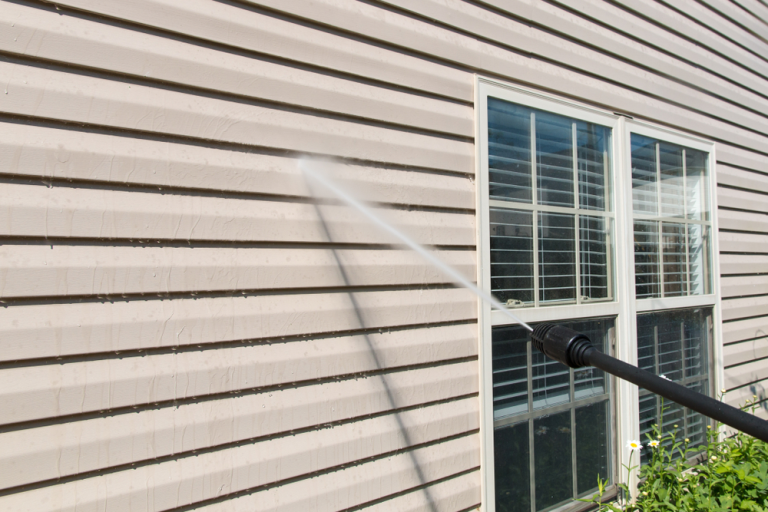
Attach a rinse nozzle to your garden hose and use steady water pressure; no need for a full-blown power washer here.
If you prefer to use a pressure washer, read the pressure washer manual first. Always use the chemical tank for diluted cleaners, not straight solutions, and aim the spray horizontally to avoid forcing water behind the panels.
Step 4: Let It Sit, Then Rinse
Give your cleaner a few minutes to work; 5 to 10 minutes usually does the trick.
Then rinse thoroughly with a hose, working in smooth sweeps until there’s no residue left. Leaving cleaner on your siding (even vinegar) can leave white haze or streaks later on.
If you notice stubborn areas, go back with a baking soda paste (mix baking soda and water) and scrub gently.
Step 5: Spot-Treat Stubborn or Special Stains
Sometimes, nature (or humans) leaves behind things that simple soap won’t touch.
Here’s a quick guide to common problem spots and safer alternatives:
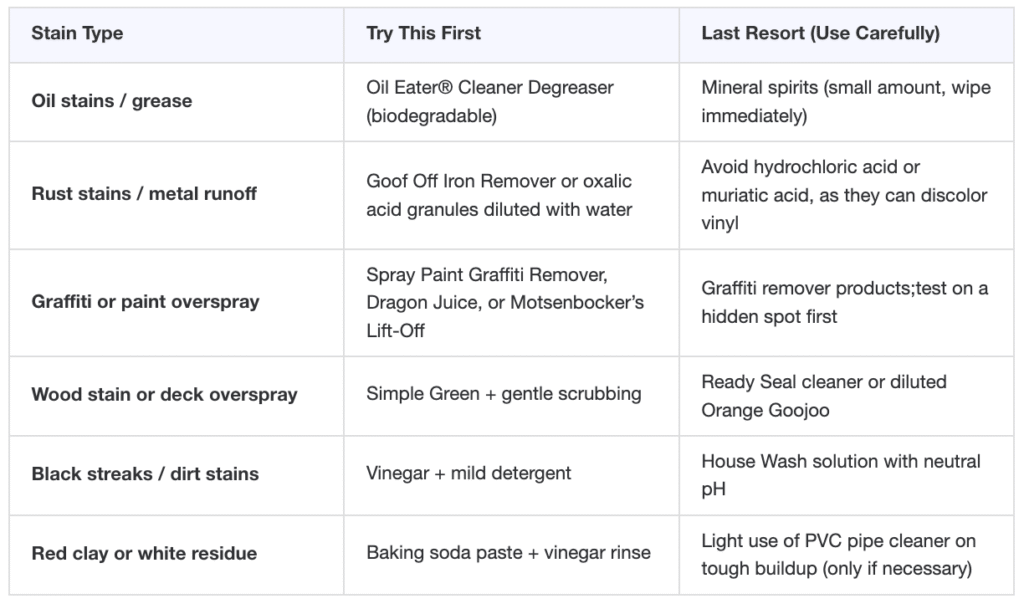
Some homeowners swear by DIY mixes involving peroxide or borax. Those can work, but they’re best used cautiously, especially in hot climates like Jacksonville where sunlight can intensify chemical reactions.
Eco-Friendly Tools and Local Tips
Here’s something people don’t mention enough: tools matter as much as cleaners.
A good soft bristle brush or microfiber cloth can save hours of scrubbing. For tall areas, a long-handled brush with a spray attachment helps you reach without a ladder.
If you’re in Jacksonville, you’ll find EPA Safer Choice certified products like Simple Green and Oil Eater® Cleaner Degreaser in most hardware stores. They’re designed for siding, gutters, even fences.
Speaking of which, if you’re cleaning siding near gutters, it’s smart to use a gutter cleaner or rinse away any runoff quickly. Many people don’t realize how much grime drips down from gutters onto their siding.
When DIY Cleaning Isn’t Enough
There’s a point where scrubbing turns into chasing ghosts. You clean, it looks great for a week, and then those same stains creep back. That’s not a cleaning issue anymore. It’s a siding issue.
Over time, UV rays and Florida humidity can make vinyl siding brittle and porous. Once that happens, dirt and stains don’t just sit on the surface; they sink in. You might even see bubbling, warping, or fading that no cleaner can fix.
Sometimes stains are only the symptom. The real problem is behind the panels; moisture trapped where it shouldn’t be, wood fiber rotting, or gaps around metal flashing letting water seep in.
That’s when replacement becomes not just cosmetic, but practical.
When to Consider Siding Replacement
A good rule of thumb: if you’ve cleaned the same area more than three times in a year and the stains keep coming back, it’s probably time to have your siding inspected.
Here’s what to look for:
- Panels that feel soft or warped
- Discoloration that won’t fade, even after washing
- Cracks or holes, especially near window trims
- Loose or rattling panels during storms
- Mold or mildew smell indoors (a sign that moisture might be sneaking behind siding)
Replacing old siding isn’t just about curb appeal. Modern vinyl options like Royal Woodland Siding, one of the brands All Florida Exteriors installs, are more durable, UV-resistant, and eco-conscious. They’re made to resist staining and fading, which means less cleaning and fewer chemicals over time.
Why Professional Installation Matters
You can find dozens of residential siding contractors when you search “siding contractors near me” online, but experience counts. Jacksonville’s mix of heat, humidity, and storms can stress siding seams and nails.
All Florida Exteriors has worked with homeowners across Jacksonville, St. Augustine, Daytona Beach, and other Central Florida communities. Our team knows how to install siding that stands up to the weather — tight seams, clean corners, proper flashing — the kind of detail work that prevents the same stains from reappearing.
And if you’re just not sure whether cleaning or replacement makes sense, we can help you figure that out, too. We’ve seen plenty of “DIY oopsies” where a pressure washer cracked panels or a chemical left dull streaks. Sometimes the fix is small. Other times, it’s smarter to start fresh.
FAQs | Safe Natural Cleaners for Vinyl Siding
Q1. What’s the safest natural cleaner for vinyl siding?
A1. A soft-bristle70/30 mix of water and white vinegar removes most stains. For tougher grime, add a few drops of mild dish soap.
Q2. Can vinegar damage vinyl siding?
A2. No. Vinegar is gentle enough for routine cleaning and helps prevent mildew without fading your siding.
Q3. Is pressure washing bad for vinyl siding?
A3. Not if used correctly. Use low pressure, a wide spray angle, and avoid aiming upward. Always follow your pressure washer manual and the dilution ratio for cleaners.
Q4. How do I remove mold without bleach?
A4. Mix water, vinegar, and baking soda. Apply with a soft-bristle brush, wait a few minutes, and rinse with a hose.
Q5. When should I replace my vinyl siding?
A5. If stains return quickly or you notice cracking, warping, or moisture damage, replacement may be more cost-effective long-term.
Wrapping Up | Safe Natural Cleaners for Vinyl Siding
Cleaning vinyl siding doesn’t have to mean pouring chemicals into the soil or breathing in harsh fumes. If you’ve been looking for how to get stain off vinyl siding safely, the good news is that a few eco-friendly products, the right tools, and a little patience can go a long way. You can restore your home’s look and protect the planet at the same time.
And if you’ve done all that and your siding still looks tired, don’t stress. It happens. Vinyl has a lifespan, and Florida weather tends to shorten it.
All Florida Exteriors helps homeowners in Jacksonville and beyond keep their homes looking sharp, from eco-friendly maintenance tips to full siding replacement. Whether it’s refreshing your curb appeal or upgrading to more efficient, weather-resistant materials, we’re here to help you make the best decision for your home.
Ready to see what new siding can do for your home?
Contact All Florida Exteriors for a free siding inspection and estimate. Let’s get your home looking clean, strong, and beautiful again — naturally.